Quality Control: The Empire Strikes Back (NES)

Box Art for Star Wrars: The Empire Strikes Back for the NES
Get The Empire Strikes Back for the NES from eBay

I previously reviewed the JVC Star Wars game that was made for the NES before the SNES came out. It wasn’t a good game. I’ll be honest–it was a very bad game. The shooting controls were bad, and some of the enemies were cheap as hell. However, now we have a game based on the second installment of the trilogy, and now I’m going to see what improvements they’ve made from the prior installment of the series. Now, I wasn’t able to beat the game, but I made it through far enough to get a fair cop about what the game would be like.

The Premise

If you don’t know the premise to The Empire Strikes back, go to your local library, video store, to Netflix, or even to YouTube. I’ll wait.

You’re back? Good. Okay, the game follows that plot, though it focuses entirely on Luke and pads things out a bit, but not by too much.

The Good

We don’t get any enemies which are as on-nigh impossible to beat as the Bounty Hunters were in part 2, at least in the portion I made it through thus far. Additionally, they’ve re-balanced weapon damage some, where most regular enemies go down with one shot from a blaster, a few tougher enemies (like mini-probe droids) take multiple shots, and for bosses they’re essentially a pew-pew gun. However, Light-Sabers can take down the tougher enemies in a couple hits, and they’re more productive for bosses. Read more

Where I Read – Nintendo Power #34

On to issue 34 of Nintendo Power. Our cover story is, well, a game that they’ve been covering off and on for several issues now. The game is Legend of Zelda: A Link to the Past, and since it’s probably one of the most highly regarded Zelda games up until either Ocarina of Time or Majora’s Mask (depending on who you ask). I frankly think it’s a step down from last issue’s rather impressive TMNT cover art. The letters being printed this issue relate to the question, “Tell me what you want, what you really really want.” Well, they’ll tell you what they want, what they really really want.

Yes, that’s right. I just referenced the Spice Girls.

Anyway, kids being rather selfish beings, they want lots of games or candy or cash, all that sort of thing. However, one reader can be trusted to be inventive – he wants Nintendo Power boxer shorts, he even came up with a design, which he sent with the letter. Read more

Where I Read – Electronic Gaming Monthly #84

Moving right along with the EGM recaps, we come to issue 84 for July of 1996. Our cover story for this issue is a series of Star Wars previews. To be specific, among other things, the big Star Wars mega-event Shadows of the Empire is coming out, in comic, novel and now video game form. Our Editorial from Ed Semrad talks about this year’s E3, which is also the second E3. Already it’s gotten really big really quick. On a bigger note, the Sendai Publication era of EGM is over. Ziff Davis has bought out Sendai Publications. I don’t want to be all cynical and grim and say that this was the beginning of the end for EGM or anything. However, the reason 1up was sold and EGM was closed, was because of the massive debts that Ziff Davis had incurred and poorly managed. Former EGM staffers like Dan “Shoe” Hsu have gone on record on podcasts about this. Unless Sendai Publications had the same debt problems (or worse), Ziff Davis hadn’t bought Sendai, EGM wouldn’t have ceased operations a year or so ago. That said, I am pleased as punch that it’s back, and that Steve Harris is back at the helm (though I should note that Steve Harris is still on the masthead as the Publisher for EGM on this issue). Anyway, with this issue, the roster of EGM that would later carry on to 1up continues to grow–Crispin Boyer is now on-board as an Associate Editor. I have no idea what he’s up to now. He left Ziff Davis in 2008, before the Great Purge. Read more

Quality Control – Legend of the Mystical Ninja

Buy this from eBay

The Legend of the Mystical Ninja series is a game series I’ve heard a fair amount about in the past. I’ve heard that it’s a good game series, and I’ve heard it’s got a tongue in cheek atmosphere. Despite all this, I’ve never taken the time to try any of the games in the series. Maybe it’s because many of the more lighthearted 16-bit games I’ve played haven’t been that good. Maybe it’s because of a certain degree of cognitive dissonance – for me the definitive ninja game series is the Ninja Gaiden series, and that definitely takes itself seriously. So, this last issue of Nintendo Power finally got me to knuckle down and try out the first Legend of the Mystical Ninja game. Read more

Where I Read – Nintendo Power #33

Moving on to the Nintendo Power Recaps, we come to issue #33 for February of 1992. Our cover story for this issue is Teenage Mutant Ninja Turtles III: The Manhattan Project. The art is definitely continuing the improvement in the cover art that started last issue. Our letters column features of people with their copies of Nintendo Power while on vacation across the world and by across the world I mean, across the continental US and in Indonesia. What, you couldn’t manage pictures from Canada or Mexico?

Teenage Mutant Ninja Turtles III Guide

The turtles are getting their third game, something similar to the Arcade game, but with a few differences. We get a run-down of the Turtles and their special moves. We get maps of all 6 stages, which will take you to the fight with Shredder. That one you’ll have to handle on your own. This is, currently, the only Turtles game I haven’t played yet. This makes a good qualifier for a Quality Control pick. Read more

Where I Read – Electronic Gaming Monthly #83

So, when I was recapping the last issue of Electronic Gaming Monthly, I didn’t cover the issue’s editorial. That’s because it didn’t have one that I could find. However, we’re now on issue #83 for June of 1996 and we have an editorial column this issue. First, I do need to mention that this issue’s cover features Sonic The Hedgehog and the new wave of 3D platforming games. Anyway, the editorial column for this issue, unfortunately, steps into the territory of describing the stuff that’s in the table of contents, which is a little disappointing considering that EGM has had some of the best editorials in the history of video game magazines. Also, while I’m not a typography geek, I really don’t like the typeface they use to for the table of contents. If someone knows the name of that type face it would be nice to know so I don’t use it in the future.

Press Start

Sega has unveiled the Saturn 2.0 – which can best be described as a slightly cheaper version of the Saturn. We get some discussion of the changes for the system, both from the innards (including a smaller physical motherboard, and moves the I/O board onto the motherboard instead of having it on a separate board like the original, replacing some metal parts with plastic parts), as well as making the unit physically smaller. However, they dumped the CD-ROM access LED, which is in my opinion a bad move, the access LED is helpful for telling when your system locked up because of a buggy game. Also, the system is going for $199. This is opposed to the N64 which is going for $250. Let’s make this clear: the Sega Saturn, which we know through 20/20 hindsight failed, is running for less than the N64 and has a bigger software library. This says rather impressive things about the loyalty of Nintendo’s fan base. We also get a comparison of the US and Japanese Sega Saturn Controllers. In short, the Japanese Saturn controller kicks the US controller’s butt. We even have reviews – which (by the way) is the first time Dan “Shoe” Hsu gets his name on an article in EGM. By means of explanation, at this point in EGM’s history, articles didn’t have bylines, so there’s no way to tell who wrote what, outside of the Review Crew segment and stuff like this. Read more

Quality Control Review – Super Off Road

If you’ve been reading this blog for a while, you’ll probably have figured out that I like racing games. They’re one of my favorite genres of video games, alongside RPGs, wrestling games, shumps, and shooters. For those counting – that’s my top 5 right there. So, after having refrained from picking other racing games (including F-Zero) for my Quality Control picks, I decided to pick a racing game. The game in this case is Super Off Road.

The Premise

Drive a race car around a track, be in the top 3 to advance to the next track. In between races you can upgrade your car’s top speed, acceleration, shocks, tires, and top speed, as well as buying Nitro boosts, all using the prize money you earn from winning races Read more

Where I Read – Nintendo Power #32

On to Nintendo Power’s 5th anniversary. As a reminder, this is not the fifth year Nintendo published a magazine. Prior to this they had the Nintendo Fun Club newsletter – which I will get to in due time. Our cover game is Super Castlevania IV for the SNES, which is, I believe, the first time a third party SNES game has made the cover of Nintendo Power. With the magazine’s 5th year, we’re now also getting a new comic strip, adapting the Legend of Zelda. They’re also bundling one of four strategy guide with your subscription. Hmm… I may review those. So, on to issue #32 for January of 1992. Read more

Where I Read – Electronic Gaming Monthly #82

Finally, after a stretch of hopping, skipping, and jumping across gaps in the archives, we now have contiguous issues. So, this week’s issue is #82 for May, 1996, and our cover story is Virtua Fighter 3, with notes on a preview of the “Saturn 2.0” – which I suspect becomes Sega’s last console, the Dreamcast. Also, a little notable first for this issue is the debut of Dan “Shoe” Hsu as an assistant editor. We even have his baby picture (as we get a semi-collage of the editorial staff’s baby pictures). Read more

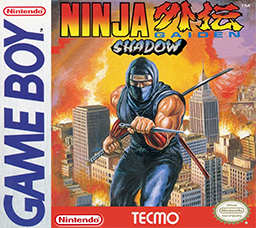
Quality Control – Ninja Gaiden Shadow

Ninja Gaiden is one of those series that hold a special place in my heart. It’s a game series, like Castlevania, that is known for it’s steep learning curve, that I can’t beat without using save states, and that I love anyway. Ninja Gaiden Shadow, isn’t exactly in that series. It was originally released in Japan as a port of the NES game Shadow of the Ninja, but Tecmo liked it so much, they bough the game. Well, now it’s time to find out if it was worth their money, and yours.

The Premise

Ryu Hayabusa is a young man. His father is still alive and is still in possession of the Dragon Sword.  As Ryu trains in New York, he learns of a sinister plot by Emperor Garuda to take over the city for his lord, Jaquio. Ryu goes forth to save the city and the world. Read more

Where I Read – Nintendo Power #31

The Nintendo Power train continues on to issue #31, for December of 1991. Our cover story is Metroid II for the Game Boy – the first Game Boy game to make it to the cover. The cover art is better than last issue’s art, but not by much.

Letters

The theme for this issue is what you’d want your ultimate gaming system to be. As you can imagine when a large chunk of your reader base is kids, basically they want a console that does everything–including their homework.

Batman: Return of The Joker Guide

The Joker is back, and the Batman is waiting. The guide details the new power-ups for this game: a crossbow, homing batarangs, the Sonic Neutralizer, and the Shield Star (which is a spread attack). We get maps for stages 1 through 6. I have to say that the levels look really generic. Levels 1 & 7 are the only ones which really have a look to them that feels different – though the gimmick for 5 is itself generic – it’s a sewer level. Read more

Where I Read – Electronic Gaming Monthly #81

So, this week, with our EGM recaps, we’re skipping ahead another few months, to issue #81 for April of 1996. Our cover story for this issue is Street Fighter Alpha II, and I have to say that the cover art isn’t very good. Frankly, the mid-90s have not been kind to EGM’s covers.

Editorial

This issue Ed Semrad is taking up the pen for the editorial column. It’s been almost a year since the last issue of EGM I recapped, and the Nintendo 64 still isn’t out. That said, at the very least they have decided what they’re calling it now. Ed also has some complaints about Capcom’s inability to count to 3 with game titles, referring to Street Fighter Alpha II (and the lack of a proper Street Fighter III), and also warning Capcom that they should avoid from taking some of the mis-steps that Sega had taken with their Virtua Fighter series around this time (with Virtua Fighter Kids being singled out). The editorial column is much more stream of consciousness this issue. Additionally, they’ve taken to increasing the font size for certain words and phrases for emphasis. I don’t particularly like that. It disrupts the flow of the column, and makes it feel more like a rant. Read more

Where I Read – Nintendo Power #30

Moving on to our Nintendo Power recaps, we come to issue #30 for November of 1994, and our cover story is Final Fantasy II, otherwise known to the rest of the world (and most gamers today) as Final Fantasy IV. Oh, and the Chocobo on the cover, even though it is black, isn’t the wrong cover. It’s flying, and in Final Fantasy II/IV Black Chocobos are the ones that can fly.

Letters

This month they were asking for letters from people asking who they’d like to play multi-player Game Boy games with over the link cable. About half of them don’t specify a game, but a few do. A few writers specify the game they’d like to play against that person – usually something in the same “field” as the person works in. For example, one person wants to play Bo Jackson’s Baseball against Bo Jackson, NASCAR Challenge against Bill Elliott, NBA All-Star Challenge against Michael Jordan, and so forth. The semi-exception being one player who wants to play multi-player Tetris against Soviet Premier Mikhail Gorbachev because, and I quote “I would like to study his strategy and maybe even beat him.” I like that. Read more

Where I Read – Electronic Gaming Monthly #75

Alright then. We’re going back, after a long hiatus, to my Electronic Gaming Monthly recaps. This time we’re skipping ahead some to issue 75, for October of 1995. Our cover story is Mortal Kombat III for the Sony PlayStation and… Street Fighter: The Movie – The Game for the Sega Saturn. I can tell you right now which one I’d rather play.

Editorial

Danyon Carpenter has this issue’s editorial column. As the 16-bit generation comes to an end, it’s going out with some pretty impressive games. Secret of Mana and Secret of Evermore, Final Fantasy VI, Chrono Trigger, among other games for the SNES. The Genesis on the other hand is getting Vectorman, Comix Zone and other good games. So, Danyon advocates hanging on to those soon-to-be oldies-but-goodies for your 16-bit systems, something that I can definitely agree with. Read more

Video Game Review – Battlefield: Bad Company

Get Battlefield: Bad Company from Amazon.com

Well, it’s a new year, and with the new year comes more opportunities to clear more titles off my Pile of Shame. First up is the spinoff of EA’s Battlefield series, aimed for the Consoles – Battlefield: Bad Company.

The Premise:

Private Preston Marlowe has screwed up. After going in a joyride in a helicopter, destroying a General’s limo in the process (along with the helicopter), Marlowe is assigned to B Company of the 222nd regiment, also known as Bad Company. The unit has the highest mortality rate in the Army, and is made up more-or-less entirely of bad apples. His squad is not an exception. It consists of pyromaniac George Gordon Haggard Jr., Terrence Sweetwatter, and Sgt. Sam Redford, who volunteered to be in the unit if it would get him out of the Army early. When the squad discovers that enemy forces in this war have hired the mercenary company “The Legionnaires” – an infamous mercenary company that is always paid in gold, they decide to go on a Payroll heist. Read more

Video Game Review – Burnout: Paradise (PS3)

Get Burnout Paradise from Amazon.com

So, I’ve previously reviewed Need for Speed: ProStreet and Carbon. Both were pretty decent racing racing games, putting aside the very significant and major flaws I pointed out in my reviews of both games. Well, in my review of ProStreet, I said I’d give GRID a try. As you can tell from the title of the review, I haven’t. What I have tried is Criterion’s more arcade style, open world street racing game Burnout: Paradise. I’ve basically made it through career mode (I’ve gotten my Burnout License), so it’s time to give my thoughts on the game.

The Premise:

No particularly story in this game. You complete various racing events in the fictitious city of Paradise City. As you complete racing events, you upgrade your license. As you upgrade your license you unlock additional cars, as well as unlocking cars by taking them out (by which I mean force them into a wreck) while driving around the city. Read more

Where I Read – Nintendo Power Issue #29

This week’s Nintendo Power, issue for October of 1991, finally has some better cover art – for Star Trek! Oh, and this is a good one too – they’re finally getting back up to speed. It’s original art too, not stock art from Paramount either. I can tell they’re using a model, but it still looks good anyway. It helps that they’re using the Constitution Class refit.

Letters: Our themed letters this issue are based around parents who hyjack their kids console, in that they’re gaming enough that the kids have to try (and fail) to chase them off the NES.

F-Zero Guide: We have notes on the games controls, and which tracks you’ll have to race on which circuits. We also have notes on the various vehicles and their pilots, including Captain Falcon. Read more

Where I Read – Electronic Gaming Monthly #64

This week’s issue of EGM, #64 for November of 1994, is a doozy – 398 pages (including the cover), just short of 400 pages. We’ve also got one heck of a cover story, the 32X version of Doom. Now, due to the length of this issue, I may end up skipping a few games if they’re games that just don’t interest me. In particular, I’m going to skip the sports section entirely, and for the system specific coverage I’m going to skip games that were reviewed earlier in the issue (and possibly games that don’t interest me).

Editorial: Since this is, basically, the second-to-last issue of 1994, it’s time once again to speculate at where the video game industry is going, particularly considering that the game industry going to enter the 32 bit era soon. Read more

Where I Read – Nintendo Power #28

This week’s Nintendo Power recap finally takes us into the 16-bit era, with issue for September of 1991 and our cover story is Super Mario World for the SNES. I’m strongly considering dropping my “no classics” restriction for this game. However, let’s see what else we have this issue first.

Letters: We get a bunch of suggestions for future contests.

Super Mario World Guide: We get coverage of Mario’s new companion, Yoshi, as well as the game’s power-ups. We also get notes on some of the enemies in the game, along with some of the over-world maps. We also get notes on what levels are where, but we don’t get detailed level maps – which is kind of unfortunate, as this is the only mainstream Mario game I’ve gotten lost on. For the record, I also got a little lost in Super Mario RPG, but that’s a slightly different matter. We also get some notes on finding the Star Road – but again, they don’t get in a lot of detail on anything. Read more

Where I Read – Electronic Gaming Monthly #63

This week we continue with our EGM recaps with issue 63 for October of 1994. Our cover story for this issue is Donkey Kong Country for the SNES, one of Rare’s latest games.

Editorial: Well, last issue, Steve Harris teased an announcement this issue about Capcom’s responce to their lower review for Super Street Fighter II Turbo. Well, this issue we learn Capcom’s response – they blacklisted (at least where Advertisements are concerned) EGM to “make a statement” in the words of Capcom’s director of marketing. Steve Harris says that the only statment coming from Capcom here is that they don’t have faith in their products, and I can’t help but agree. Further, I’d expand on that by saying that any game publisher or developer who engages in the journalistic equivalent of the Tarkin Doctrine only succeeds in making them look like the bad guy to the gaming press. If they blacklist a blogger or web site, then they’re picking on the little guy. If they’re blacklisting an established bastion of games journalism, then they’re making a Nixon-esque enemies list. Further, this is only aggrivated when they’re doing the blacklisting for a review that isn’t particularly bad. The Street Fighter II series had been pushing perfect scores in EGM for most of its run. This is the first game that didn’t, and thus they get upset over it. Read more

Concert Review – Video Games Live

Video Games Live 2008-2009 Tour Poster (courtesy of videogameslive.com)

So, I’m doing a break in my usual reaps with a review of a concert I went to today. To be specific, Tommy Tallerico and Jeff Wall’s tribute to video game music – Video Games Live has finally come to Portland, and I’ve finally seen it. So, what did I think?

The Premise

Tommy Tallerico & Jeff Wall lead (in this concert) the Portland Philharmonic and the Pacific Youth Choir in a performance of music from various video games, including the Kingdom Hearts series, the Final Fantasy series, Mario, Legend of Zelda, and other games. Read more

Where I Read – GamePro #50

The GamePro Recaps have hit issue 50 for September of 1993. Our cover story is Mortal Kombat, the latest fighting game (as of this issue) to rock the arcades. The cover art though, isn’t so hot, but that’s to be expected.

Letters: We get a letter discussing improvements to game endings. Or, at least getting it something better than “Congratulations, You Won.” We also have a small string of letters discussing violence in games, and they generally agree is that some games are too violent for parents and they’re disappointed with Sega instituting a rating system because it would promote censorship. We also get questions about what systems might be getting what cheat devices. Read more

Quality Control – Darkman (NES)

Darkman is, by far, my favorite Sam Raimi film. I like it more than his Spider-Man films. I like it more than Army of Darkness. In my mind it is one of the best masked avenger films, and one of the best superhero films. Everything about it is excellent, from the direction, to Liam Neeson’s performance. It’s just excellent. So, when I found out about this game in Nintendo Power, I wanted to give it a try. Yes, it’s a movie licenced game from Ocean, but it can’t be all bad, can it?

The Premise:

Peyton Westlake is a scientist working on a synthetic skin formula for burn victims. When Robert Durant, crime boss, burns down his lab and leaves him for dead, horrifically burned and scarred, Westlake swears vengeance, and takes his imperfect formula (which only lasts for 99 minutes when exposed to direct sunlight), and uses it to take apart Durant’s gang, piece by piece. Read more

Where I Read – Nintendo Power #27

Our Nintendo Power Recaps continue with Issue #27 for August of 1991. Our cover story this issue is a Game Boy game – Mega Man: Dr. Wily’s Revenge.

Letters: This issue our focus is on a Little League baseball team from the US that got to play in Japan, with a little help from Nintendo of America.

Ninja Gaiden III Guide: The Ninja Gaiden series comes to not its final installment – but the last one for quite some time. Irene Lew has been murdered, and Ryu has been framed, and now Ryu must avenge his her murder and clear his name. We get the powers, including all the new ninja arts and power-ups. We also get maps for Acts 1 through 7, with some storyline notes, and notes on beating the bosses up to level 4. Read more